Trunk Trick
An undergraduate at Xi'an Jiaotong University, an independent developer, and a competitive programmer obsessed with the craft of algorithms.
From number theory to graph theory, from data structures to dynamic programming. This is where I document every "aha!" moment along the journey. Built slowly, written carefully.
// Lowest Common Ancestor
int lca(int u, int v) {
    if (depth[u] < depth[v]) swap(u, v);
    int diff = depth[u] - depth[v];
    for (int i = 0; diff; i++, diff >>= 1)
        if (diff & 1) u = up[u][i];
    if (u == v) return u;
    for (int i = LOG-1; i >= 0; i--)
        if (up[u][i] != up[v][i])
            u = up[u][i], v = up[v][i];
    return up[u][0];
}
CONTIGUITAS
Physical memory contiguity
One unmovable page inside a 2 MB block is enough to poison the whole block. Contiguitas wins the space back by not scattering those pages in the first place.
- 1ConfinementUnmovable pages are allocated only inside a dedicated region, never mixed into the movable pool.
- 2Dynamic resizingThe boundary between the two regions grows and shrinks with memory pressure.
- 3Hardware migrationHardware moves unmovable pages from Src to Dst, with no software in the loop. Dropped for xv6, which has no live-device pages.
Topics I Write About
Every topic here comes from real problems I've encountered. The visualizations are my way of making abstract ideas concrete.
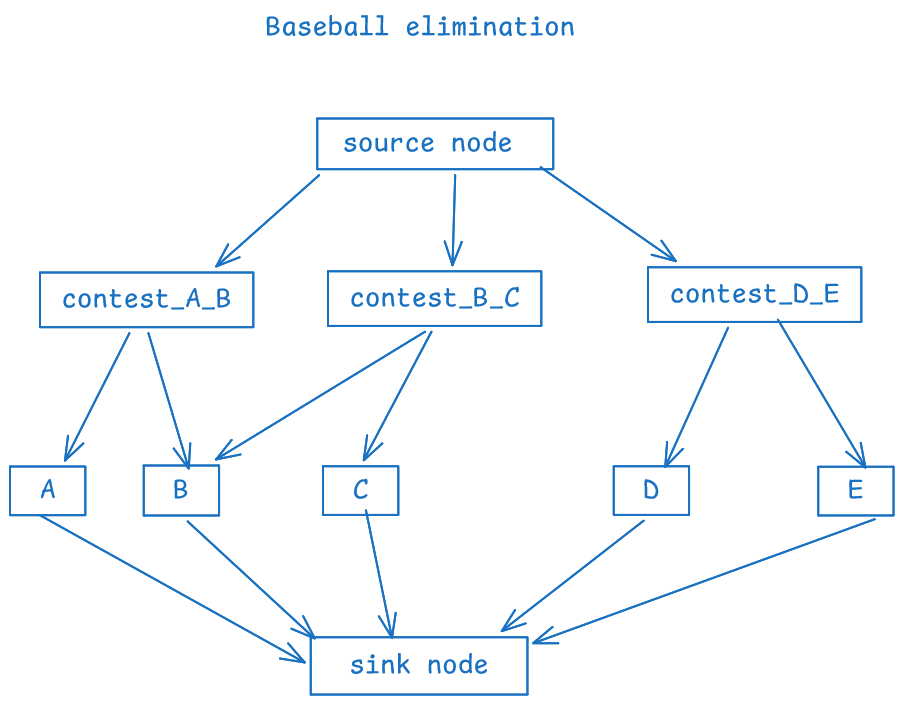
Max Flow Modeling
How do you determine whether a sports team is mathematically eliminated from the playoffs? The answer is a maximum flow network: source nodes representing remaining games, team nodes with carefully chosen capacities, and a sink that reveals the truth.
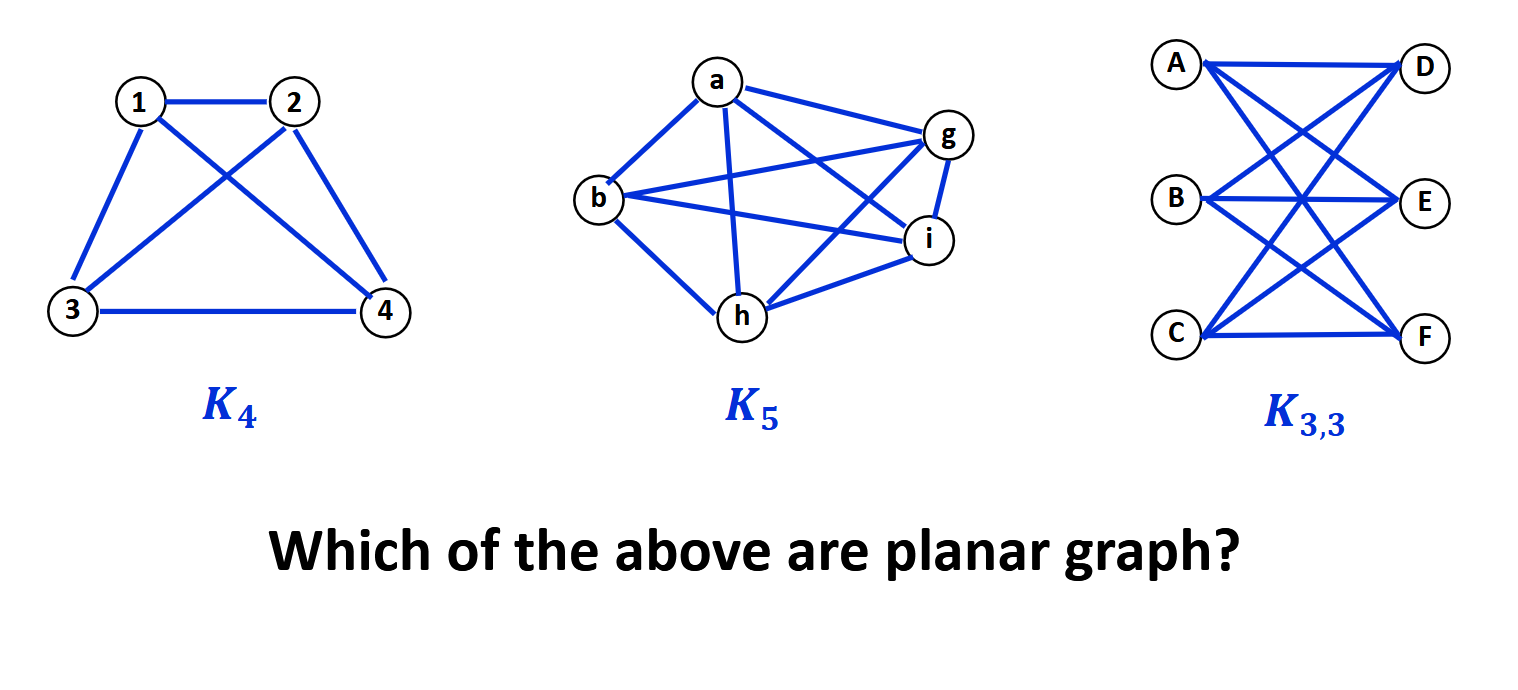
Planar Graphs & Kuratowski's Theorem
Which graphs can be drawn on a plane without crossing edges? From Euler's formula $V - E + F = 2$ to the forbidden subgraphs $K_5$ and $K_{3,3}$, planarity theory sits at the intersection of discrete mathematics, topology, and computational geometry.
    // Disjoint Set Union
    int find(int x) {
        return p[x] == x ? x : p[x] = find(p[x]);
    }
    void unite(int a, int b) {
        a = find(a), b = find(b);
        if (a != b) {
            if (sz[a] < sz[b]) swap(a, b);
            p[b] = a; sz[a] += sz[b];
        }
    }
Disjoint Set Union & Path Compression
The Union-Find data structure with path compression achieves nearly $O(1)$ amortized time per operation. Deceptively simple, just a few lines of code, yet it's the backbone of Kruskal's MST, dynamic connectivity, and countless competitive programming solutions.